
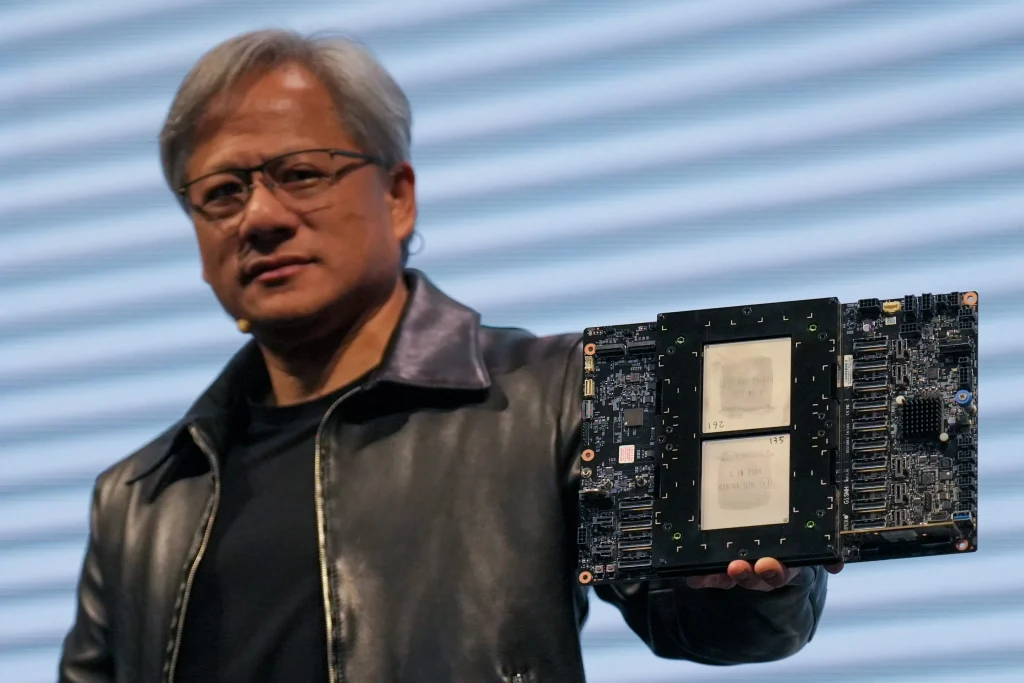

Nvidia’s decision to shift a portion of its chip production to the U.S. is a strategic move driven by a combination of geopolitical, economic, and technological factors. While Nvidia is a “fabless” company—meaning it designs its chips but outsources the manufacturing—it is the primary driver behind its partners’ decisions to build or expand their facilities in the United States. This shift is a response to several key trends:
1. Geopolitical Risks and Supply Chain Resilience
Concentration in Asia: The global semiconductor supply chain is heavily concentrated in Asia, with Taiwan being the dominant hub for advanced chip manufacturing. This presents a significant risk due to potential geopolitical instability, particularly given China’s territorial claims over Taiwan.
Mitigating Disruptions: By establishing a domestic manufacturing base, Nvidia and its partners can create a more resilient supply chain. This reduces the risk of disruptions from natural disasters, pandemics, or international conflicts that could halt production and impact the global economy.
Trade Tensions and Export Controls: The ongoing trade tensions between the U.S. and China have led to export controls and tariffs on advanced technology. By manufacturing in the U.S., Nvidia can navigate these restrictions more effectively and ensure a stable supply for its American customers, while also potentially avoiding tariffs on imported goods.
2. Government Incentives and Policy
The CHIPS and Science Act: The U.S. government has made it a priority to boost domestic semiconductor manufacturing through the CHIPS and Science Act. This landmark legislation provides billions of dollars in grants, tax credits, and other incentives to companies that build or expand chip production facilities in the United States. This financial support helps to offset the higher costs of U.S.-based manufacturing compared to overseas options.
Strategic Alignment: Nvidia’s move aligns with the government’s goal of enhancing national security and technological self-reliance. By securing a domestic source for its critical AI chips, the U.S. reduces its dependence on foreign suppliers and strengthens its position as a leader in a critical technology.
3. Market Demand and Proximity to Customers
The AI Revolution: The demand for Nvidia’s AI chips is skyrocketing, driven by the explosive growth of generative AI, large language models, and cloud computing. The U.S. is a major market for these technologies, with companies building “AI factories” (massive data centers) that require a steady and secure supply of chips.
Faster Time to Market: Having production facilities closer to its customers allows Nvidia to shorten its supply chain, reduce shipping times, and respond more quickly to market demands. This is especially important for cutting-edge technology where every day counts in the race to market.
4. Technological and Manufacturing Innovation
Advancing the Ecosystem: Nvidia is not just a customer; it’s a technological partner in the manufacturing process. The company is using its own AI and robotics platforms to help design and automate the new factories, making them more efficient and competitive. For example, it is working with its partners to use its “cuLitho” software to accelerate computational lithography, a key step in chip fabrication.
Creating an End-to-End Supply Chain: While the fabrication of the most advanced wafers is being handled by partners like TSMC in Arizona, Nvidia’s shift is also encouraging the development of a complete domestic ecosystem, including advanced packaging and testing facilities in the U.S. This is crucial for creating a truly resilient supply chain.
In summary, Nvidia’s shift is a calculated response to a changing global landscape. It’s a move to de-risk its supply chain, capitalize on government incentives, meet unprecedented demand, and solidify its position at the center of the AI revolution by helping to build a robust domestic manufacturing ecosystem.


