
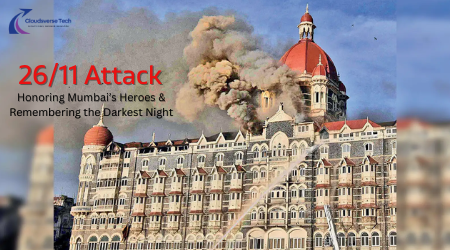

Mumbai-terror-attack-remembering-horrors-and-heroes
It has been 17 years since the 26/11 Mumbai terror attack, yet the memories of that horrific night remain painfully vivid. Known as one of India’s darkest chapters and often referred to as a black day, the events of November 26, 2008, forever changed Mumbai and strengthened the nation’s resolve against terrorism.
On that fateful night, ten heavily armed terrorists infiltrated the city via the Arabian Sea and launched coordinated attacks across multiple crowded locations. Over four days of terror, Mumbai witnessed unimaginable chaos, bravery, and heartbreak. By the time the siege ended on November 29, 2008, 166 people had lost their lives, and more than 300 others were injured.
President Droupadi Murmu Leads the Nation in Tribute (November 26, 2025)
As India marked the 17th anniversary of the attack, President Droupadi Murmu on Wednesday, November 26, 2025, paid heartfelt tribute to the brave soldiers, police officers, and civilians who sacrificed their lives during the 26/11 Mumbai attack.
In her message, she honored the courage and supreme sacrifice of the security personnel who fought relentlessly to protect the nation. The President urged every citizen to reaffirm their collective commitment to combat terrorism in all its forms, emphasizing that India must remain united, alert, and resilient.
Her tribute reminded the nation that the fight against terrorism is ongoing—and that remembering sacrifices is essential to safeguarding the country’s future.
How 26/11 Unfolded: A Timeline of Terror
Entry Through the Sea
The terrorists hijacked an Indian fishing trawler and forced it toward Mumbai’s coast. After killing the crew, they used a rubber dinghy to reach Colaba, blending into the night before splitting into pairs and moving towards their assigned targets.
Coordinated Attacks Across Mumbai
Armed with AK-47 rifles, grenades, and explosives, they targeted some of the most iconic and heavily populated areas:
- Taj Mahal Palace Hotel – site of the longest hostage crisis
- Oberoi Trident Hotel – dozens killed
- Nariman House (Chabad House) – prolonged standoff
- CSMT Railway Station – 58 killed in rapid gunfire
- Leopold Café – targeted within minutes of arrival
- Cama & Albless Hospital – encounter point for police officers
Each location faced heavy gunfire, explosions, and panic as the terrorists aimed to create maximum destruction.
The End of the Siege
The operation concluded on November 29, 2008, when Indian forces neutralized the last terrorist. Only one attacker, Ajmal Kasab, was captured alive. He was tried and executed in 2012.
Honoring the Heroes of 26/11
The attack also highlighted extraordinary acts of courage.
Police Officers Who Became Martyrs
- Hemant Karkare – ATS Chief, led from the front
- Vijay Salaskar – encounter specialist
- Ashok Kamte – Additional Commissioner of Police
- Tukaram Omble – whose bravery led to Kasab’s capture
Their sacrifices continue to inspire new generations of Indians.
NSG Commandos: The Bravehearts Who Ended the Siege
The National Security Guard (NSG) commandos carried out difficult room-to-room operations, rescued hostages, and neutralized the terrorists, despite the extreme risks.
Citizens Who Showed Unshakable Spirit
From medical staff to local residents offering emergency help, Mumbai’s resilience stood tall even in its darkest hours.
26/11 and Its Impact on India’s Security
In the years following the attack, India significantly strengthened its security frameworks:
- Enhanced coastal surveillance
- Establishment of NSG regional hubs
- Improved intelligence-sharing systems
- Modernized counter-terror units
- Faster emergency response mechanisms
26/11 became a turning point in India’s national security strategy.
Why 26/11 Remains India’s Black Day
Beyond the statistics, 26/11 was an attack on India’s identity, its spirit, and its multicultural heartbeat. The emotional scars remain, but so does the unity and determination that emerged from the tragedy.
Every year, the nation pays tribute to:
- 166 lives lost
- Over 300 injured
- Security forces and first responders
- Heroes who fearlessly protected Mumbai
The 17th anniversary in 2025 serves as a reminder of the sacrifices made—and the need to stay vigilant to prevent such attacks in the future.
Conclusion
Seventeen years after the 26/11 Mumbai attack, the nation continues to mourn, remember, and honor its heroes. As President Droupadi Murmu urged, this anniversary is not just about remembrance but also about reaffirming India’s resolve to combat terrorism in every form.
The stories of courage, sacrifice, and resilience from that night ensure one thing: India will never forget, and India will never stop standing strong.


