
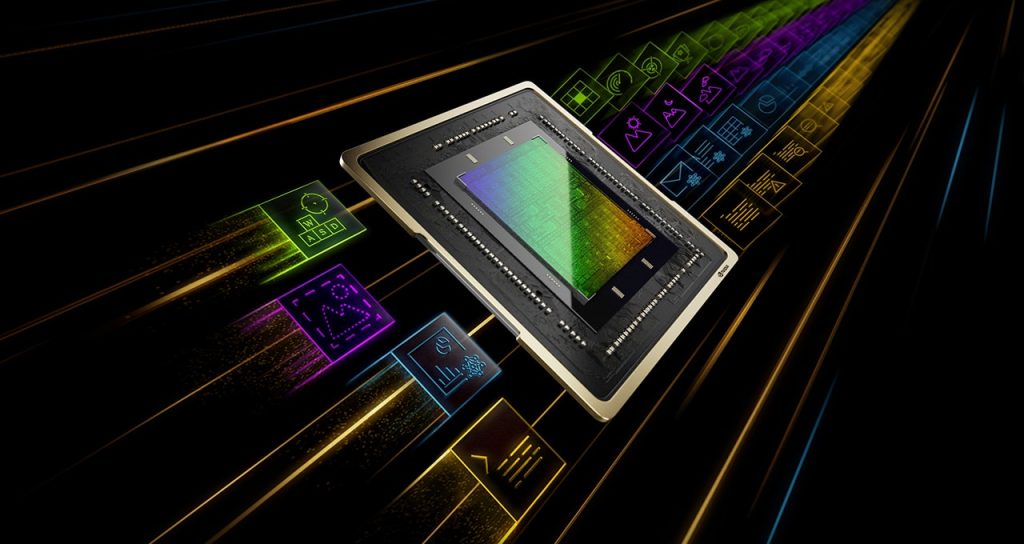

NVIDIA has fundamentally revolutionized the field of Artificial Intelligence by leveraging its unparalleled supercomputing power, driven by a holistic approach that integrates cutting-edge hardware, robust software, and a comprehensive ecosystem. Here’s how:
1. The Dawn of GPU-Accelerated AI:
From CPUs to GPUs: Historically, AI workloads were processed on CPUs, which are designed for sequential tasks. However, the explosion of deep learning and neural networks demanded massive parallel processing capabilities. NVIDIA recognized the inherent parallelism of GPUs, originally designed for graphics rendering, and pioneered their use for AI.
CUDA Platform: The introduction of CUDA (Compute Unified Device Architecture) was a game-changer. It provided a programming model that allowed developers to leverage the parallel processing power of GPUs for general-purpose computing, including AI. This unlocked significant speedups for training neural networks, reducing weeks of training to days or even hours.
2. Specialized AI Architectures (Hopper, Blackwell, and Beyond):
Hopper (H100/H200): NVIDIA’s Hopper architecture delivered unprecedented performance for AI training and inference. Key innovations included:
- Transformer Engine: Specifically optimized for Large Language Models (LLMs), drastically reducing training times for models with billions of parameters.
- 4th-Generation NVLink: Enabled ultra-high-bandwidth communication between multiple GPUs, crucial for building massive AI supercomputing clusters.
- High-Bandwidth Memory (HBM3/3e): Provided the massive memory capacity and bandwidth needed for large datasets and complex AI models.
- Confidential Computing: Enhanced security for AI workloads, protecting sensitive data during model training.
Blackwell (B100, B200, GB200, Blackwell Ultra): The Current Frontier: Blackwell represents the next generation of AI supercomputing.
- Grace Blackwell (GB200) Superchip: A revolutionary design combining two Blackwell GPUs with a Grace CPU on a single module. This tightly integrated system eliminates bottlenecks, making it ideal for the largest and most complex AI models. NVIDIA is even mass-producing these systems at an unprecedented scale (e.g., 1,000 systems per week as of mid-2025).
- Fifth-generation Tensor Cores: Further accelerate AI computations, supporting new precision formats like FP4 and MXFP6, doubling performance while maintaining accuracy.
- Second-generation Transformer Engine: Even more optimized for the scale and complexity of modern LLMs and Mixture-of-Experts (MoE) models.
- Fifth-generation NVLink: Increases bandwidth across up to 576 GPUs, enabling the training of models with trillions of parameters.
- Dedicated Decompression Engine: Speeds up data processing, crucial for data-intensive AI workloads.
- Enhanced Security: Blackwell is the first GPU with TEE-I/O (Trusted Execution Environment – I/O) support, offering robust, secure, and high-performing solutions for confidential AI training and inference.
- Power Efficiency: Blackwell GPUs significantly reduce energy consumption per operation, contributing to more sustainable AI processing.
3. AI Supercomputing Systems (DGX Platform):
DGX Systems: NVIDIA moved beyond individual GPUs to build complete AI supercomputing systems. The DGX platform (e.g., DGX H100, DGX GH200, DGX GB200) integrates multiple GPUs, high-speed interconnects (NVLink), optimized software, and cooling solutions into a cohesive unit.
DGX SuperPOD: For the most demanding AI research, NVIDIA offers DGX SuperPODs, which scale to tens of thousands of GPUs, creating massive AI factories capable of training the largest and most complex AI models in the world.
Personal AI Supercomputers (DGX Spark, DGX Station): NVIDIA has extended this power to the desktop with systems like DGX Spark, which features the GB10 Grace Blackwell Superchip, providing petaflops of AI compute for local prototyping, fine-tuning, and inference. This democratizes access to powerful AI capabilities for individual researchers and developers.
4. Comprehensive Software Ecosystem:
CUDA-X Libraries: A rich collection of GPU-accelerated libraries and frameworks (e.g., cuDNN, cuBLAS, RAPIDS) that simplify AI development and maximize performance.
NVIDIA AI Enterprise: A cloud-native software platform that provides a full stack of NVIDIA software, including optimized frameworks, SDKs, and tools (like NVIDIA NIM microservices for generative AI deployment), making it easier for enterprises to develop and deploy AI solutions.
NGC Catalog: A hub for GPU-optimized AI software, pre-trained models, and containers, allowing developers to quickly get started with their AI projects.
AI Workbench: Simplifies AI development on GPUs, enabling seamless workflows from desktop to data center.
NeMo Framework: Specifically designed for building, customizing, and deploying large language models.
Triton Inference Server: Optimizes and deploys AI models for efficient inference in production environments.
5. Driving Innovation Across Industries:
NVIDIA’s supercomputing power for AI is not just about raw performance; it’s about enabling breakthroughs across diverse fields:
- Generative AI: Powering the creation of sophisticated large language models, image generation, video synthesis, and other forms of creative AI.
- Scientific Discovery: Accelerating drug discovery, materials science, climate modeling, and quantum computing simulations.
- Autonomous Systems: Enabling advanced AI for self-driving cars, robotics, and industrial automation.
- Healthcare: Revolutionizing medical imaging, diagnostics, and personalized medicine.
- Digital Twins and Metaverse: Creating realistic simulations and virtual worlds with AI-powered agents and environments.
In essence, NVIDIA’s strategy is to provide a complete, vertically integrated platform – from silicon to software – that makes AI development and deployment faster, more efficient, and more scalable. By constantly pushing the boundaries of GPU architecture and building a robust ecosystem, NVIDIA has become the foundational engine driving the AI revolution and shaping the future of computing.


